Accidental Blogger

A general interest blog

With earthquake devastated Haiti as the backdrop, I was surprised to come across this strange question posed by a journalist: Are reporters with backgrounds in medicine being show-offs when they simultaneously report on a disaster and administer care?

The particular reporter whose actions provoked this journalistic soul searching is Dr. Sanjay Gupta, the chief medical correspondent for CNN. Gupta administered medical care to the sick and the injured in Haiti while also reporting the news of their conditions.

Interchangeably dressed in a grey T-shirt or a black button-down, CNN's Dr. Sanjay Gupta has spent the past seven days and seven nights amid Haiti's ruins, at times abandoning the microphone and bright lights for gauze and a scalpel. …

Since he arrived in Haiti last Wednesday, Dr. Gupta has treated a 15-day-old Haitian girl whose mother perished in the earthquake, single-handedly staffed a field hospital after a Belgian medical team left the site over security concerns and, most recently, performed brain surgery on a 12-year-old Haitian girl aboard the USS Carl Vinson, which is anchored off the coast of Port-au-Prince….

Between surgeries, impromptu consults, administering antibiotics and changing IV drips, Dr. Gupta — who was unavailable for an interview — has been filing regular field reports and interviewed U.S. Secretary of State Hillary Clinton over the weekend.

In an article in the Washington Post, correspondent Ian Shapira picks up on the question originally asked by another WaPo journalist, Paul Farhi and elaborates on his own feelings about Gupta's dual role as a reporter and medic.

Today, The Washington Post's Paul Farhi poses a provocative question on journalism ethics: Are reporters with backgrounds in medicine being show-offs when they simultaneously report on a disaster and administer care?

This debate has emerged in the aftermath of Haiti's quake; journalism's longstanding traditions dictate that we are supposed to be primarily observers, and that we should intervene in events only when necessary. Admittedly, reporters tend to take themselves a little too seriously — with a dose of self-righteousness — believing that we should not interfere in a story because we would interrupt the narrative's natural rhythms. But in the case of Haiti, or in any other crisis, reporters often discard those mandates.

I confess that when I saw the CNN reporter Sanjay Gupta caring for a baby in Haiti, dealing with the child's head wound, I cringed. I thought he had an ulterior motive, that he was trying to boost CNN's flagging ratings by sending a message to audiences back home: CNN tells great stories, but CNN also saves lives! One can't help but feel that major media organizations possess a kind of lust for these disasters, with their built-in storylines, and that the onslaught of reporters is taking up so much precious space and resources, as The New Republic's Noam Scheiber recently argued..

But, the more I thought about the extreme circumstances of Haiti's situation — the seeming lack of government and scant supply of medical workers — the more my cynicism receded and the more I thought Gupta and others like him have been doing the right thing. Haiti needs help. Reporters can tell stories and show the images to help boost sympathy and donor dollars; and, in the cases of those who are qualified, administer medical aid.

Are Farhi and Shapira being stupidly purist?  Shouldn't one do what one can in matters of life and death and isn't a doctor, even in the role of a reporter, well suited to act in a crisis? Human interactions can not be compartmentalized by the rigid protocols of the Fourth Estate. Sanjay Gupta did what he should have done as a doctor, reporter and a human being.  Shapira admits in the end that Gupta did the right thing. What I found confounding is that he and his colleague bothered to bring up the issue of journalistic ethics here in the first place.
Posted in

7 responses to “Journalistic Ethics vs Common Decency – A False Choice”

  1. I suspect it’s just jealousy that prompts these kind of ‘soul-searching musings’. I mean,if you were a physician who was also incidentally a medical reporter, wouldn’t it be better to treat an injured person rather than stand in front of him jabbering about how serious his condition is to the camera?
    Maybe Farhi and Shapira feel guilty that they couldn’t do more to help, not being trained for it. Had Gupta not been able to effectively care for the wounded kid, it’s quite likely that Farhi and Shapira would be chuckling in pure schadenfreude.

    Like

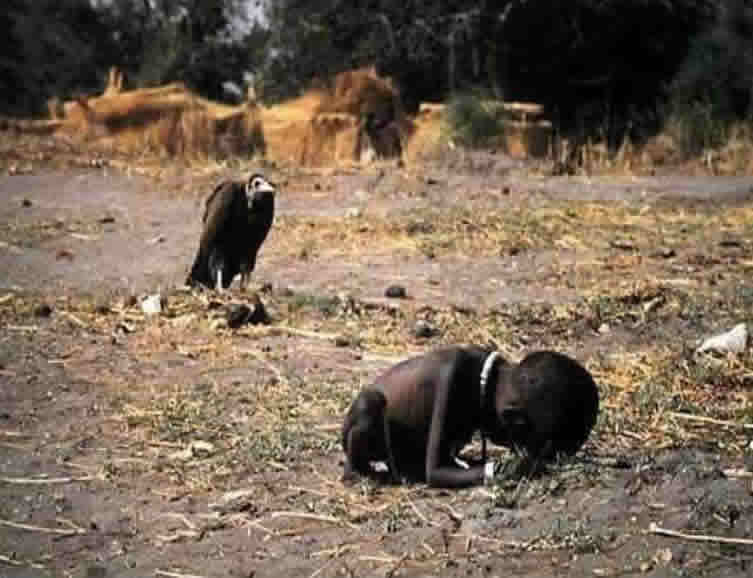
  2. Here is what sometimes happens when a reporter only reports dispassionately. And here is the photograph in question.

    Like

  3. narayan

    In the matter of Gupta’s conduct, considerations of his role as journalist are of far less concern than his obligations as a physician, a citizen and a human being. There is little in the Society of Professional Journalists’ Code of Ethics that helps to decide the right course of action in the circumstances Gupta found himdelf in. To his credit, he found the right balance by reporting while helping. One can find more guidance in the ideals implied in Good Samaritan Laws, parts of which are codified in some countries, and in the humanitarian notion of Duty to Rescue.
    The writers who brought up the subject are hardy engaged in what I think of as journalism, unless you consider a journalist anyone with an opinion and a venue to broadcast it. Safe in their armchairs (I assume), they are suffering from a case of journalistic penis envy. They are offering up Pat Robertsonisms to titillate their jaded readership and to fulfill contractual word count obligations. In a word, they are putzes.
    ‘Professionalism’, like ‘attitude’, is an abstract and empty notion often used in put-downs. What special training is required of journalists anyway (Gupta is a case in point), and who’s to sit in judgment on their ethics?

    Like

  4. Well put, Narayan. The pomposity exhibited by Farhi and Shapira deserve derision.
    You are exactly right in questioning what constitutes journalistic credentials. Who has it? Is there a framed degree that qualifies someone to become a reporter? At least, Gupta has one of those to prove that he is a bona-fide physician. Given the quality of cable news TV and what passes for journalism most of the time sometimes even in print, I am surprised that they even bothered to get on the high horse of ethics. Sarah Palin is now an expert commentator on Fox News, for chrissake.

    Like

  5. SoCalGal

    Well put, narayan. That such a lame opinion would even come up while Gupta was reporting is beyond the pale. When the reporters at CNN congratulate each other for their fine reporting on the air, that’s another matter altogether, but to administer care while reporting is Gupta just doing what he should be doing: giving care when he can as the physician that he is.
    We need professionalization of journalists, in my opinon. Otherwise, we have the current situation: anyone with an opinion and a venue to broadcast it is now defined as a journalist. That’s BS.

    Like

  6. Thanks for adding the new information, as well as your analysis. This is why your blog is one of the few I read that I also ever bother to comment on. I don’t do it to hear myself talk – I do it because I know you actually listen.

    Like

  7. Well put, Narayan. The pomposity exhibited by Farhi and Shapira deserve derision.

    Like

Leave a reply to Sujatha Cancel reply